
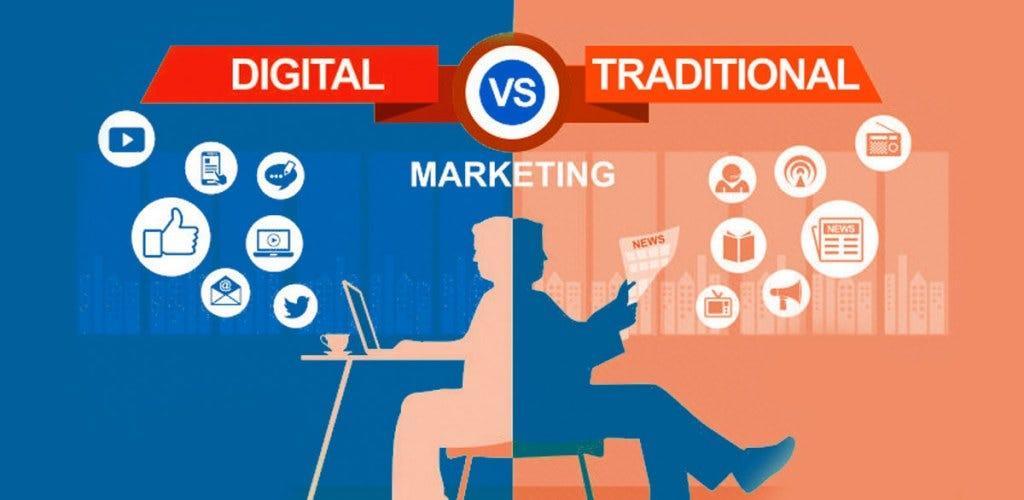
Marketing helps businesses connect with customers, build trust, and increase sales. For many years, companies relied on newspapers, radio, television, flyers, and billboards to promote their products. Today, businesses also use websites, social media, search engines, email marketing, and online ads. Many local businesses also depend on Local SEO Services to appear in Google search results when customers search nearby solutions.
This has created an important question for business owners:
Digital vs Traditional Marketing: Which Drives Better Results?
The answer is not always simple. Both methods have strengths and weaknesses. Some businesses see better results from online marketing, while others still benefit from traditional advertising.
Consumer behavior has changed significantly over the last decade. According to Pew Research Center, around 96% of U.S. adults now use the internet, making online platforms one of the most powerful places for businesses to reach customers. At the same time, television, radio, and print media continue to influence purchasing decisions and brand trust.
In this guide, we will compare digital marketing and traditional marketing based on cost, reach, targeting, engagement, ROI, brand awareness, and long-term growth. By the end, you’ll understand which approach works best and when businesses should combine both strategies. Many businesses today also rely on On-Page SEO Services to improve their visibility and performance in digital marketing campaigns.
What Is Digital Marketing?

Digital marketing refers to promoting products or services through online channels.
Common digital marketing methods include:
- Search Engine Optimization (SEO)
- Content Marketing
- Social Media Marketing
- Email Marketing
- Pay-Per-Click (PPC) Advertising
- Video Marketing
- Influencer Marketing
- Mobile Marketing
Businesses use these channels to reach customers where they spend a large portion of their time—online. o strengthen online performance, companies often combine On-Page SEO and Off-Page SEO Services for better rankings and traffic growth.
One major advantage is that digital marketing allows companies to measure results almost instantly. Businesses can track website visits, clicks, leads, conversions, and sales in real time.
Examples of Digital Marketing
- Google Search Ads
- Facebook Advertising
- Instagram Promotions
- YouTube Video Ads
- Email Campaigns
- Blog Content
- Local SEO Services
What Is Traditional Marketing?
Traditional marketing includes offline advertising methods that have been used for decades.
Common examples include:
- Television commercials
- Radio advertisements
- Newspaper ads
- Magazine ads
- Flyers and brochures
- Billboards
- Direct mail campaigns
- Event sponsorships
Traditional marketing focuses on reaching large audiences through physical or broadcast media.
Many well-known brands still invest heavily in traditional advertising because it helps build credibility and broad brand awareness.
Examples of Traditional Marketing
- TV advertisements during sports events
- Newspaper promotions
- Highway billboards
- Radio sponsorships
- Printed catalogs
- Local event banners
Digital vs Traditional Marketing: Key Differences
1. Audience Reach
One of the biggest differences between digital and traditional marketing is audience reach.
Traditional marketing often targets broad audiences. A television commercial may reach millions of viewers, but many of them may not be interested in the product.
Digital marketing allows businesses to reach specific groups of people based on:
- Age
- Location
- Interests
- Online behavior
- Purchase history
According to Pew Research Center, internet usage has reached nearly universal levels among younger adults and continues to grow across all age groups. This gives businesses access to a massive online audience.
Winner: Digital Marketing
Digital marketing provides broader global reach while allowing precise targeting.
2. Cost Effectiveness
Marketing budgets matter, especially for small businesses.
Traditional advertising can be expensive.
Examples:
- TV commercials may cost thousands of dollars.
- Newspaper ads require ongoing spending.
- Billboards involve printing and rental fees.
Digital marketing often requires lower investment.
For example:
- A Facebook ad campaign can start with a small budget.
- SEO can generate long-term traffic.
- Email marketing costs much less than direct mail campaigns.
Small businesses often choose digital marketing because it offers affordable ways to compete with larger companies. Using a Social Media Management Service helps businesses save time while maintaining a strong online presence without hiring a full-time team.
Winner: Digital Marketing
Digital campaigns generally cost less and provide more flexibility.
Digital vs Traditional Marketing for Targeting Customers
Targeting is one area where digital marketing has changed the industry.
Traditional marketing sends the same message to everyone who sees it.
For example:
A billboard cannot show different messages to different people.
Digital marketing can.
Businesses can create separate campaigns for:
- Teenagers
- Parents
- Business owners
- Local customers
- Returning visitors
This improves efficiency and reduces wasted advertising spend.
Many marketers believe precise targeting is one of the biggest reasons digital marketing produces higher conversion rates.
Winner: Digital Marketing
Better targeting often leads to better results.
Measuring Results and ROI
ROI stands for Return on Investment.
Businesses want to know:
- How many people saw the ad?
- How many clicked?
- How many purchased?
Traditional marketing can be difficult to measure accurately.
For example:
A company may place a billboard on a busy road but cannot know exactly how many sales came from it.
Digital marketing offers detailed reporting.
Businesses can monitor:
- Website traffic
- Click-through rates
- Conversion rates
- Lead generation
- Revenue
This helps marketers improve campaigns quickly.
The ability to track performance is one reason many businesses have shifted larger portions of their budgets toward digital channels.
Winner: Digital Marketing
Data tracking makes decision-making easier and more accurate.
Brand Awareness and Trust
Traditional marketing still has a strong advantage in certain situations.
Research from Nielsen found that consumers continue to trust television, newspapers, and magazines at high levels.
Many people see TV advertising as more established and credible than online ads.
A television commercial often gives the impression that a company is large, successful, and trustworthy.
Billboards and print advertising also increase local visibility.
For businesses trying to build authority and brand recognition, traditional advertising can still be very effective.
Winner: Traditional Marketing
Traditional media often creates stronger brand trust.
Customer Engagement
Marketing is no longer one-way communication.
Consumers expect interaction.
Traditional marketing offers limited engagement.
For example:
A newspaper ad cannot respond to customer questions.
Digital marketing allows direct communication through:
- Social media comments
- Live chat
- Email responses
- Online reviews
- Community groups
Customers can interact with brands immediately.
This helps businesses build stronger relationships and improve customer loyalty.
Winner: Digital Marketing
Engagement happens faster and more naturally online.
Speed of Campaign Execution
Traditional marketing campaigns often take time.
Businesses may need to:
- Design materials
- Print advertisements
- Schedule media placements
Digital campaigns can launch within hours.
Ads can be edited instantly if performance is poor.
This flexibility allows businesses to respond quickly to market changes.
Winner: Digital Marketing
Speed and adaptability make digital channels highly efficient.
Which Works Better for Small Businesses?
Small businesses usually have limited budgets.
Digital marketing helps them:
- Reach local customers
- Generate website traffic
- Build social media communities
- Compete with larger brands
SEO, local SEO, content marketing, and social media marketing can provide long-term benefits without massive advertising costs. Among these, Map Ranking Service helps small businesses get more calls, visits, and local customers from Google Maps.
A local restaurant, for example, can attract nearby customers through Google Business Profile optimization and Facebook promotions.
Traditional marketing may still help with local awareness, but digital marketing often delivers better value for small companies.
Winner: Digital Marketing
Better affordability and targeting make it ideal for small businesses.
Which Works Better for Large Brands?
Large companies often use both approaches. They also rely on Business Consultation Service to plan large-scale campaigns and manage multi-channel marketing strategies effectively.
Examples include:
- TV commercials
- Sponsorships
- Billboards
- Social media campaigns
- Search advertising
- Email marketing
Research on advertising effectiveness has shown that traditional advertising can improve perceived quality and brand value, while digital advertising helps drive engagement and customer action.
This combination allows businesses to maximize exposure and conversions.
Winner: Hybrid Approach
Large brands benefit from using both channels together.
Pros and Cons of Digital Marketing
Pros
- Lower costs
- Global reach
- Better targeting
- Easy performance tracking
- Fast campaign changes
- Higher engagement
- Strong lead generation
Cons
- High competition
- Constant content creation required
- Frequent platform changes
- Ad fatigue among users
Pros and Cons of Traditional Marketing
Pros
- High credibility
- Strong local visibility
- Excellent brand awareness
- Reaches offline audiences
- Memorable advertising formats
Cons
- Higher costs
- Limited targeting
- Difficult ROI tracking
- Less flexibility
- Slower campaign adjustments
Consumer Behavior Is Changing
Modern consumers often begin their buying journey online.
Many people:
- Search Google before purchasing
- Read reviews
- Compare products
- Watch videos
- Follow brands on social media
This shift has increased the importance of digital marketing.
However, traditional media still influences buying decisions.
Television, radio, and outdoor advertising continue to support brand recognition and trust.
The most successful companies understand how customers move between online and offline experiences.
The Future of Digital vs Traditional Marketing
The debate is no longer about choosing one side.
Marketing is becoming more integrated.
Businesses increasingly combine:
- SEO and content marketing
- Social media campaigns
- Email marketing
- TV advertising
- Event sponsorships
- Outdoor advertising
Customers may first see a billboard, then visit a website, follow a brand on social media, and finally make a purchase online.
This connected experience is shaping the future of marketing.
Companies that understand both digital and traditional channels will have a stronger competitive advantage.
Digital vs Traditional Marketing: Which Drives Better Results?
For most businesses today, digital marketing delivers better measurable results.
It offers:
- Lower costs
- Better targeting
- Detailed analytics
- Faster execution
- Higher engagement
However, traditional marketing remains valuable for:
- Brand awareness
- Trust building
- Local visibility
- Mass audience exposure
The best choice depends on your goals, audience, and budget.
If your objective is lead generation, conversions, and measurable ROI, digital marketing usually performs better.
If your goal is broad awareness and brand recognition, traditional marketing still has an important role.
The strongest marketing strategies combine both approaches to create a complete customer experience.
Conclusion
The discussion around Digital vs Traditional Marketing continues because both methods serve different purposes.
Digital marketing gives businesses precise targeting, real-time data, lower costs, and stronger customer engagement. Traditional marketing offers credibility, broad exposure, and long-term brand recognition.
Instead of asking which one is better, businesses should ask which one is better for their specific goals.
A small business looking for leads may benefit most from SEO, content marketing, and social media advertising. A larger company launching a national campaign may combine television, outdoor advertising, and digital promotions.
In today’s competitive market, the most successful brands use both digital and traditional marketing together. This balanced approach helps businesses reach more people, build trust, and generate better long-term results.
Ready to Grow Your Business with the Right Marketing Strategy?
Choosing between Digital vs Traditional Marketing does not have to be difficult. Every business has unique goals, target audiences, and budgets. The key is creating a marketing plan that delivers measurable results while maximizing your investment.
Whether you need help with:
- Search Engine Optimization (SEO)
- Local SEO Services
- Social Media Management
- Content Marketing
- Google Ads Campaigns
- Website Optimization
- Online Reputation Management
A professional marketing strategy can help your business attract more customers, increase visibility, and generate consistent growth.
At Roy Web Marketing, we help businesses build stronger online presences through proven digital marketing solutions tailored to their goals. From improving search rankings to generating qualified leads, our team focuses on strategies that produce real business results.
Ready to take your marketing to the next level? Contact Roy Web Marketing today for a free consultation and discover the best strategy for your business.
Get Started Now: Visit Roy Web Marketing and let us create a customized marketing plan designed to help your business grow faster and reach more customers.
Your future customers are already searching online. Make sure they find your business first.